Hello PPMA members and friends
Following an excellent webinar delivered by conference and awards sponsor Senatus Consulting on the role of AI in workplace investigations, Managing Director Karen Wise has shared this thought-provoking blog post. In it, she explores some of the key issues organisations should consider as AI becomes increasingly embedded in workplace processes and decision-making.
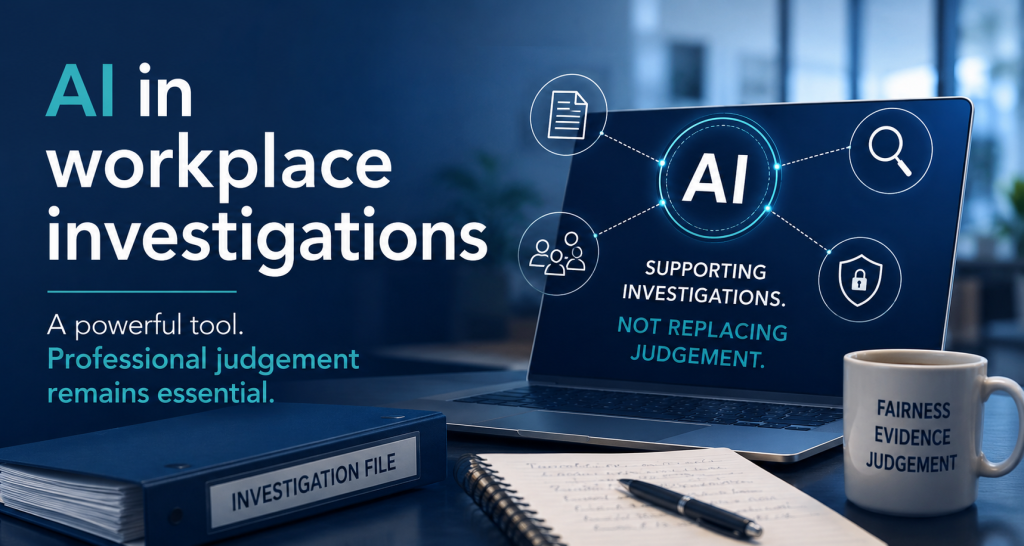
AI is increasingly being used in all aspect of HR, including workplace investigations – our area of specialism. Used carefully, AI can be incredibly helpful. However, it is just a support tool, and is not a replacement for professional judgement, critical thinking or procedural fairness.
What HR professionals should be mindful of when using AI
- AI outputs are only as reliable as the information provided to them.
- Confidentiality and data protection obligations must always be considered before uploading information into AI tools. Investigations contain identifying or sensitive personal data.
- AI cannot detect subtle interpersonal dynamics, hidden motives or behavioural nuances. For example, AI cannot help you determine if there has been collusion.
- Rewriting text with AI can alter nuance, tone or meaning, even where the facts remain technically correct – a summary could appear accurate, but the nuance may be lost. Authors should always make sure they make the final decision on the phrasing of each sentence in an investigation report.
- If you are using AI in the writing of reports or letters, this should be declared.
Practical ways AI can support workplace investigations
- Use AI to analyse the investigation report using different “personas”. When you give AI an instruction, add a sentence that asks it to respond from the perspective of an HR professional, a lawyer or a trade union, for example. Using a range of “personas” helps you analyse your findings from different perspectives.
- When a case is complex, AI can help generate timelines. When doing so, instruct AI to identify inconsistencies, contradictions or missing events. Be specific in your instructions, to avoid AI ‘hallucinations or assumptions.
- Ask AI to identify gaps in the investigation report – from missing references to areas requiring further enquiry.
- Use AI to highlight where reports drift into opinion rather than evidence-based factual findings.
When used thoughtfully, AI can improve the robustness of an investigation and quality assurance. However, organisations still require experienced investigators to exercise judgement and maintain accountability.
If you want to know more, please watch our recent PPMA webinar on AI in investigations: https://youtu.be/JHWjYakRjKM

Karen Wise, Managing Director, Senatus Consulting