Hello PPMA members and friends
Today’s Local Government Reorganisation (LGR) announcements mark the beginning of a significant new chapter for the remaining LGR areas councils across England.
For HR, OD and workforce leaders, the real work starts now.
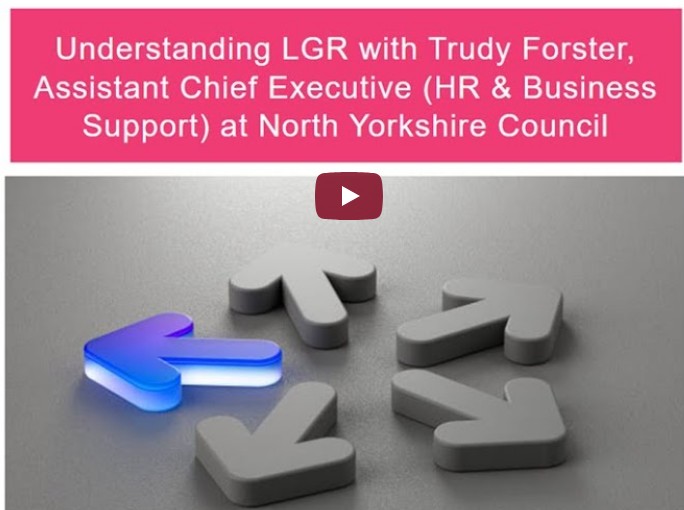
While every reorganisation is different, there is enormous value in learning from those who have already experienced the journey. During a recent PPMA webinar, PPMA Vice President Trudy Forster, Assistant Chief Executive at North Yorkshire Council, shared her honest reflections on leading one of the country’s largest local government reorganisations. You can watch the full webinar here
North Yorkshire brought together seven district and borough councils and one county council to create a single unitary authority serving more than 620,000 residents. Trudy describes the experience as challenging, demanding and, at times, exhausting, but also an opportunity to shape the future.
Here are some of the key lessons she shared.
1. Start preparing before the decisions are made
One of Trudy’s strongest messages is not to wait.
While formal decisions may still be pending, there is plenty that HR and OD teams can begin preparing now. Understanding your workforce, mapping terms and conditions, reviewing workforce data and identifying potential risks will all save valuable time once reorganisation begins in earnest.
As Trudy explained, once the decision is announced, “it’s full throttle ahead.”
2. Build relationships across councils early
Even while councils are developing different proposals, Trudy encouraged HR and OD professionals to work collaboratively.
Although political leaders may naturally focus on competing bids, workforce teams have a shared responsibility to support employees through uncertainty.
Sharing wellbeing resources, toolkits, ideas and practical solutions avoids duplication and helps everyone provide better support for staff.
3. Never underestimate the emotional impact of change
One of the most powerful themes from the webinar was the emotional side of reorganisation.
Where councils have invested significant time and energy promoting one preferred model, staff can experience a genuine sense of loss if another option is selected.
Trudy described this as a form of grief.
People are not simply adjusting to new structures—they may also be processing the loss of familiar organisations, leaders, identities and ways of working.
Recognising those emotions, rather than dismissing them, is an essential part of successful organisational change.
4. Communication matters—even when you don’t have the answers
Staff naturally want certainty.
Will I still have my job?
Who will my manager be?
Where will I be based?
What will my role look like?
The reality is that many of those questions cannot be answered immediately.
Rather than waiting until everything is known, Trudy recommends communicating regularly throughout the process. Honest updates—even when the message is simply “we don’t know yet”—help reduce uncertainty and build trust.
Creating opportunities for staff to ask questions, raise concerns and feel heard is just as important as providing information.
5. Focus on what staff really worry about
One of the biggest surprises following North Yorkshire’s reorganisation was that many of the biggest concerns weren’t strategic at all.
Instead, people worried about practical day-to-day issues:
- Where will I sit?
- Will I still work with my team?
- Can I access other council buildings?
- Will my security pass work?
- Where do I park?
- How do I book a desk?
- Can I still print documents?
These may seem like small operational details, but collectively they have a huge impact on how people experience change.
Sometimes the smallest frustrations become the biggest barriers to helping people feel part of a new organisation.
6. Get the basics right first
Throughout the webinar, Trudy repeatedly returned to one principle: focus on being safe and legal.
One example stood out above all others.
“Don’t mess up people’s pay.”
Ensuring payroll works correctly on day one became one of North Yorkshire’s highest priorities. Wherever possible, systems were aligned before vesting day to minimise disruption and give staff confidence that the new organisation was functioning effectively.
7. Invest in culture from the very beginning
Culture doesn’t happen after reorganisation—it needs to begin during it.
North Yorkshire involved staff from across all eight councils in developing the new organisation’s values, behaviours and identity. Employees helped shape everything from the council’s values to its branding, giving people a genuine sense of ownership before the new authority officially launched.
Regular pulse surveys throughout the transition also helped leaders understand how staff were feeling and identify emerging issues before they became larger problems.
8. Use your own people wherever possible
Although external expertise has its place, Trudy believes organisations should involve their own people as much as possible.
By creating additional capacity for business-as-usual work, experienced HR and OD professionals were able to contribute directly to the transformation programme. That meant the people designing the new organisation were also the people who would help lead it afterwards.
This created stronger ownership, preserved organisational knowledge and helped retain talented employees throughout the transition.
Looking Ahead
Every Local Government Reorganisation will be different.
There will be different structures, different geographies and different challenges.
But Trudy’s experience highlights a number of themes that apply everywhere: communicate openly, support your people, collaborate wherever you can, and never lose sight of the human impact behind organisational change.
As councils begin the next phase of Local Government Reorganisation following today’s announcements, those practical lessons may prove every bit as valuable as the formal programme plans.
PPMA will continue to support members throughout the reorganisation journey by sharing practical experiences, insights and opportunities to learn from colleagues who have already been there.