Hello PPMA members and friends
The conversations, ideas and challenges explored at this year’s PPMA Conference sparked plenty of reflection long after the event ended. This week, longstanding PPMA member, Secretary and Treasurer, Steve Davies shares some of the key themes and insights that stood out to him.
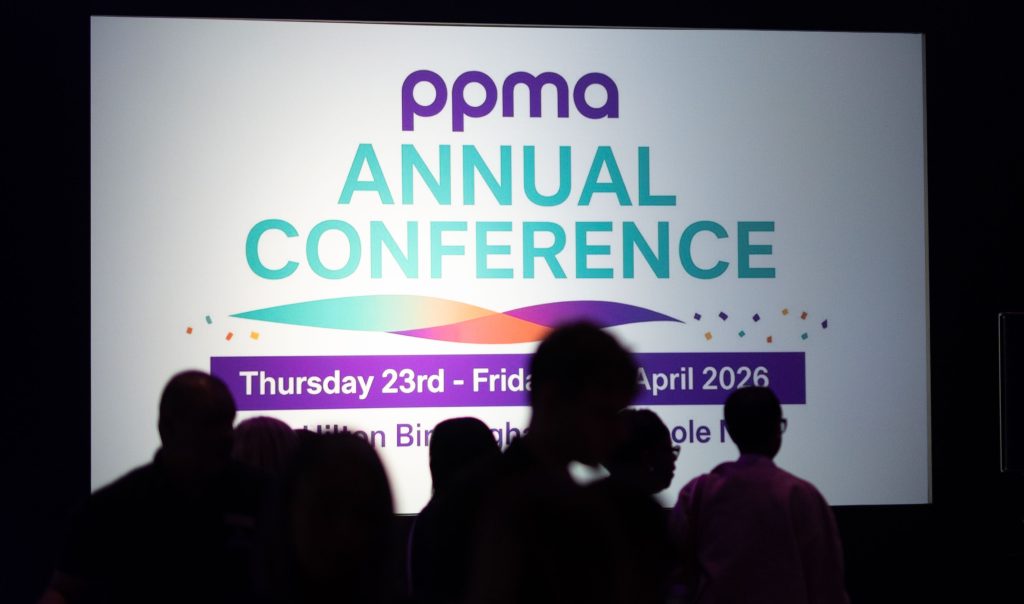
The annual PPMA HR Conference at the Hilton Birmingham Metropole Hotel in April, was another great event providing insights to the challenges facing public service and local government HR/OD colleagues and the potential solutions to tackle these from expert speakers.
Below is a flavour of some of the thought-provoking ideas and insights presented by our speakers.
Graeme McDonald, SOLACE (Society of Local Authority Chief Executives) Managing Director explored the growing workforce, organisational and leadership pressures facing UK local government. He argued that financial, structural and reform challenges are fundamentally people and organisational challenges, requiring HR and OD teams to become strategic leaders in shaping resilient councils and systems.
He outlined that there are several major external pressures shaping the future operating environment for councils including is that councils are navigating simultaneous financial, political, technological challenges as well as cultural declining public trust in institutions.
Graeme presented the role of Organisation Development (OD) as the key mechanism for enabling organisational resilience and transformation, supporting organisations through large-scale change and integration; enabling collaboration across organisations and systems; promoting inclusive leadership and improving attraction and retention as well as building talent pipelines.
Theresa Grant OBE shared her extensive experience of leading local government through major reforms and reorganisations. Drawing on decades of frontline leadership, she provided practical insights into effective leadership, navigating complex structural change, and ensuring transformation delivers meaningful impact.
The central message is that successful reorganisation depends on strong and visible leadership with a clear vision and governance, together with establishing a collaborative culture and communication with all interested parties, especially the workforce and doing it at pace.
Theresa drew on her experience of helping to transform Northamptonshire local authorities, creating 2 unitary authorities from 8 councils, one of which was the county council, with a total staff complement over 5,600 and over 800 systems and 300 councillors.
Her key messages relating to staff was to be cognisant of the different experiences staff felt from reform. There was resentment from district and borough council staff and managing different organisational cultures, ways of working and pay and conditions is difficult. Some staff thrived during the transformation and advanced their careers, whilst others struggled with uncertainty. The message is that change is both structural and emotional.
Theresa identified that key leadership requirements for successful local government reform were providing reassurance and stability during uncertainty; strong governance; collaborative leadership; maintaining pace of change; and at the same time ensuring service delivery continuity through strong oversight and appropriate risk management.
Eddie Copeland, Director of the London Office of Technology and Innovation (LOTI), explored how artificial intelligence (AI) and emerging technologies are transforming how public sector organisations attract talent, improve workforce efficiency and deliver services.
Eddie distinguished three broad categories of AI: Narrow AI – designed for specific tasks, often learns from historical data/cases; Generative AI (GenAI) – Creates new content from existing data and works through prompts, examples include tools like ChatGPT and MS copilot; Agentic AI operates autonomously and represents a more advanced and potentially disruptive form of AI.
A major focus of the presentation was showcasing real examples of councils using AI and data-driven tools. These included:
- Machine learning being used to identify likely unlicensed Houses in Multiple Occupation (HMOs) based on historical data patterns.
- AI being used to segment care package reviews and predict where intervention may be needed to enable more personalised and targeted services.
- Harrow council developed a digital twin using image-based mapping and street-level visualisation technology to help identify illegal messaging boards being set up around the authority.
- Hackney introduced AI-supported automation for Freedom of Information (FOI) requests.
- AI is being used to simplify language and improve accessibility of council communications.
- AI-generated visualisations being used to model future health and care scenarios.
The presentation criticised traditional public sector programme approaches that rely on making large upfront business cases and linear planning models and instead advocated for more experimentation and small-scale testing with rapid feedback loops.
Eddie argued that successful AI adoption depends heavily on culture and challenged organisations to measure and evaluate consistently, share learning effectively and empower staff to solve problems locally.
Overall, the PPMA conference delivered again over 2 days by providing HR/OD professionals with great speakers who shared their expertise and experience in leading organisations and businesses through changing operating environments.
We look forward to seeing you in 2027, where together we will continue to explore the challenges, opportunities and future direction of public sector HR and OD.

Steve Davies, PPMA Secretary and Treasurer.